
What exactly is brand authority?

Gerd doesn't run ads, he doesn't have an SEO strategy, and his logo is 30 years old. And yet, Gerd has more brand authority than many startups with multi-million-dollar budgets. Why? Because Gerd delivers on his promises. Every morning starting at 6 a.m.
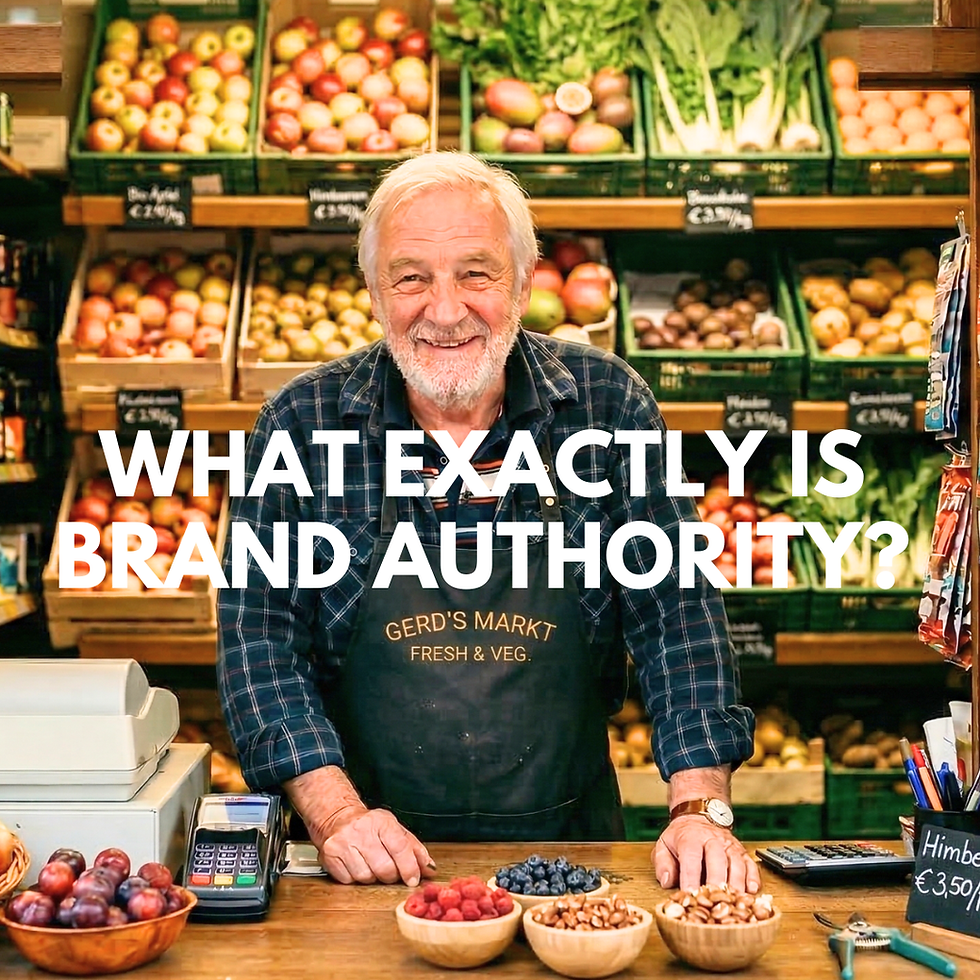
In my branding work, a term keeps cropping up that is frequently used but rarely truly understood: brand authority.
Many believe that brand authority arises from awareness, marketing budget, or volume. Wrong. Brand authority arises from credibility.
Brand authority describes the degree of credibility and trust your brand enjoys among your target audience. High brand authority means your brand is perceived as trustworthy, competent, and reliable. People listen to it, look to it for guidance, and buy from it—often without extensive comparison. Brand authority is therefore not a marketing metric, but a relationship of trust.
The reason brand authority is so crucial today lies in our communication reality. We live in a time where everyone can broadcast. Anyone can present themselves as an expert, every brand can make claims. This is precisely why people have a strong need for guidance. They seek brands they can trust. Brands that not only make claims but deliver on their promises.
This is where brand authority begins.
It is not created through campaigns, but through congruence between promise and reality. The central element of every brand is its brand promise. But this promise only has meaning if it is also kept.
Brand authority arises precisely where the brand promise consistently aligns with reality. When a company makes a promise and consistently delivers, trust is built. And trust breeds authority. Not overnight, but over time. Just like with Gerd.
A brand with authority can usually be recognized by three things.
Firstly, clarity: The brand knows what it stands for.
Secondly, in terms of consistency: She communicates and acts consistently.
Thirdly, regarding credibility: What it promises is actually delivered.
When these three factors come together, something very valuable is created – attraction. People actively seek out this brand.
Many companies try to project authority. They talk about market leadership, innovation, or quality. But authority cannot be asserted. Authority is bestowed by the target audience. And it only arises when brand, behavior, and performance are aligned.
If brand authority is the degree of your credibility, a simple question arises: How credible is your brand really? Does what you promise match what your customers experience? Or is there a gap? That's precisely where brand building begins.


Comments